Retractable awning choices
An awning closes unevenly: document the outside before adjusting anything
Record front-edge gaps and their history safely, then have the provider assess the actual unit without improvised fabric pulling, weights or arm adjustment.
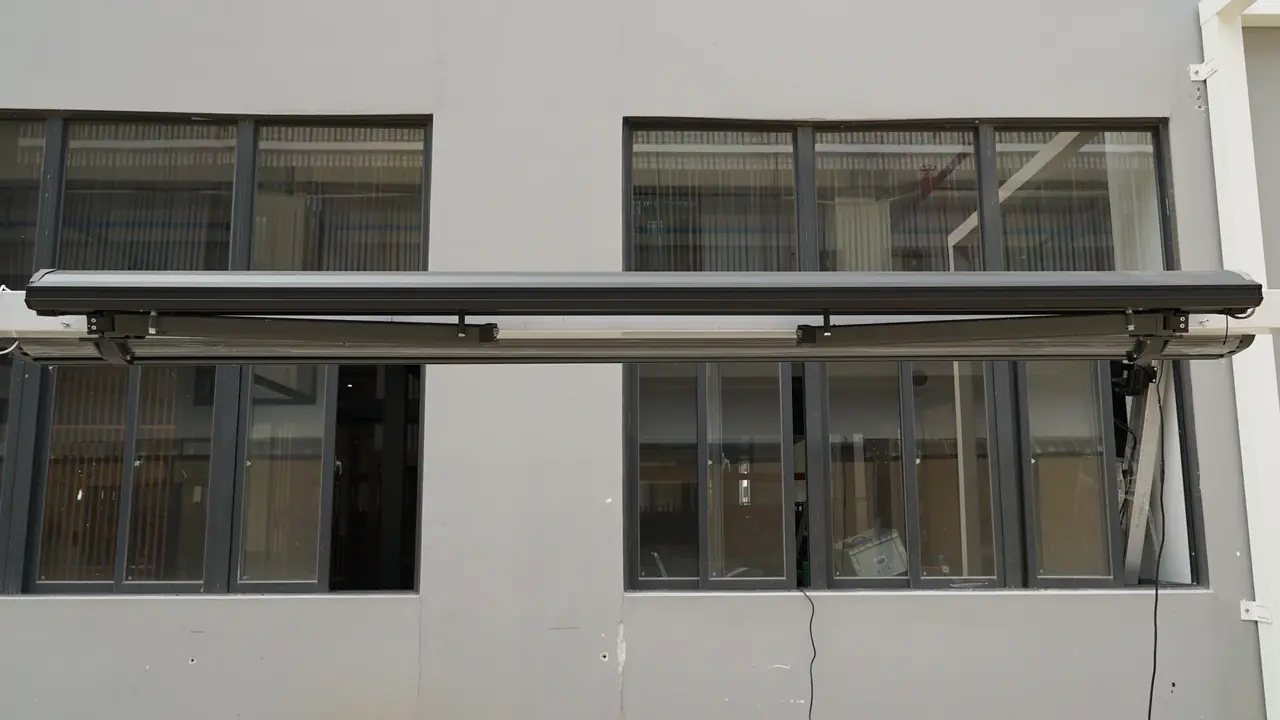
Distinguish a new change from a newly noticed condition
Review whether the uneven appearance existed before or changed recently, using installation photographs, service records and recent use. Observe the relationship between both ends and the cassette from a safe overall viewpoint; an oblique camera angle can complicate interpretation. Follow pause-and-service instructions when unusual sound, obstruction or other abnormalities occur. The owner’s task is to provide accurate visible evidence, not identify a particular arm, textile or wall connection as the proven cause from the first close-up photograph of the symptom.
Use consistent viewpoints and equipment states
Keep an overall forward view and end details, labeling whether the equipment was normally retracted, partly deployed or stopped as instructed. Confirm that any requested movement recording is permitted before running an abnormal unit for footage. Record cleaning, visible contact, recovering or service and who performed it. Do not pull the bar level or weight the fabric for a better-looking image. Such actions alter evidence and may introduce other issues. Original-state photographs and a concise timeline help determine whether professional attendance is needed.
Adjustment scope depends on the actual construction
Retraction and connection arrangements vary, so an adjustment point shown online may not apply. Give the provider full identifiers and use the appropriate documentation instead of loosening brackets, tensioned parts or end connections. A newly installed unit calls for reference to the agreed layout and handover record; a later change also needs service history. Neither automatically produces the same diagnosis or warranty decision. The proposed response should state assessment scope, required work and review method so the owner understands what is being done without attempting an arm-adjustment procedure from a generic guide.
Retain a new comparison baseline after service
After service, record findings, actual adjustments or replacements and the permitted operating checks completed. Repeat photographs from the same viewpoint for future comparison and keep outstanding items visible. If documentation establishes an acceptable appearance, retain the applicable explanation rather than only a verbal reassurance. Reassess after recovering or relocation because an old conclusion does not cover a changed configuration. This moves the discussion from visual impressions to a traceable process, seeking an appropriate use and maintenance decision rather than having owners adjust every visible line until it appears perfectly parallel.
- Compare earlier photographs and account for camera angle.
- Preserve original condition, operating state and recent records.
- Assign mechanism adjustment appropriately and retain review results.
Can I pull the front bar level if the awning retracts unevenly?
Do not correct an unknown issue by pulling, weighting or loosening components. Record overall and end relationships, state and history from a safe position, then consult the provider. Follow stop instructions for obstruction or unusual sound. Adjustment and continued-use decisions need model-specific evidence and assessment.
More questions, practical answers →