Hardtop pavilion planning
Parts left after gazebo assembly: distinguish spares from omissions
Identify leftover components and confirm whether they are intended spares or unresolved assembly items.
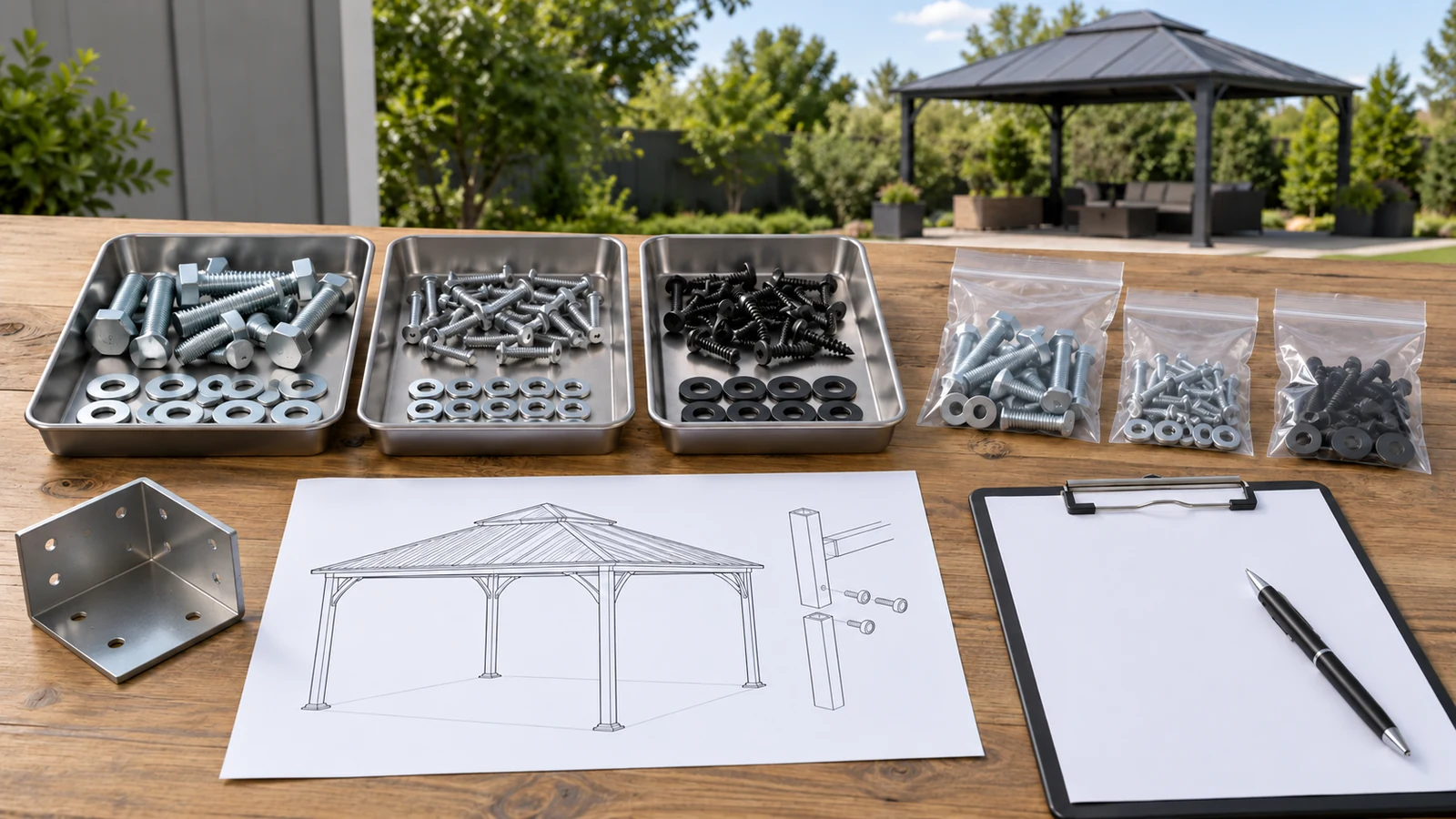
Keep unused components identifiable
After assembly, retain unused parts and record markings, shape and quantity. Do not discard them or add them wherever they appear to fit. They may be configuration-specific components, documented spares or items requiring further investigation. Provide the order, product version and matching instructions to the installer. Similar-looking parts with different dimensions should remain separately identified. The aim is an explanation for each group, not an empty bag achieved by guesswork or an unsupported assumption that every extra item is a spare.
Check the matching inventory rather than appearances
Ask the installer to map unused parts to the inventory, relevant assembly stage and delivered configuration. A spare designation needs an identified basis; an optional component needs an explanation of why this order did not use it. Unexplained items should go to the supplier for a defined assessment. Apparent steadiness is not a substitute for verification. Users should not dismantle connections or apply a different model video. Separate confirmed findings from pending questions and retain dates and responses for future service.
Consider two similar unused connector types
Imagine two bags of similar connectors remain. One is explicitly identified as spare in the matching inventory; the other has no explanation. Resolve them separately rather than extending the first answer to both. Send labels, photographs and quantities so the supplier can define any inspection and its responsibility. Appropriate personnel should carry out and document that work. A single completion photograph rarely provides the same service value as identifiable component records and evidence that particular questions were resolved.
Include the resolution in the handover
File the classification, quantity, storage location and supplier response. Label confirmed spares with model and purpose, while unresolved items remain separate. If an omission is identified, record the inspection, corrective scope and required verification rather than only marking it fixed.
Retain any batch-specific explanation. A spare quantity confirmed for this order is not a general standard for another product or assembly. The record should remain understandable when a different owner or technician later opens the parts container.
- Retain identities, quantities and kit version.
- Resolve each unused component category separately.
- Hand over assessment records and labelled spares.
Can leftover screws normally be treated as spares after assembly?
Use the matching inventory and supplier confirmation. Identify the parts and distinguish documented spares, configuration-specific items and unresolved questions. Avoid improvised fitting or disposal, and retain any assessment result.
More questions, practical answers →